When we talk about “inclusion,” digital inclusion has to be part of the conversation. We spoke to Innovate Trust about why digital inclusion matters for people with a learning disability.
Around 7% of adults in Wales over the age of 16 are digitally excluded, meaning they don’t have access to online spaces. Digital Care Hub also found that around 32% of UK people with a learning disability lack basic digital skills, a gap that limits access to everyday essentials like banking, healthcare, transport, shopping and staying in touch with others.
That’s why organisations like Innovate Trust, who provide supported living services and community support for adults with a learning disability, autism and additional needs, are doing such important work. Innovate Trust was recently reaccredited under the Digital Inclusion Wales programme, recognising its ongoing commitment to helping people build the digital skills, confidence and access they need to thrive online.
At the heart of that work is the Insight app. Launched in 2019, its mission is to promote digital inclusion and tackle social isolation, and it’s grown into something much bigger than an app; it’s a genuine community.
We caught up with Digital Innovations Manager Ashley Bale to talk about digital accessibility, why it matters, and what more can be done to make the online world work for everyone.
How did the Insight app begin?
Ashley: We were working with the people we support to learn how adults with learning disabilities were engaging with social media and online content. Many told us they’d had poor experiences on mainstream platforms, receiving negative reactions or comments on posts and content they’d shared. They also told us they struggled to remove content they’d posted and didn’t always understand how to report problems or get support when things went wrong.
Our initial idea was to create an app for the people we support, their families and partner organisations. Then, in 2020, the pandemic hit, and we decided to launch our app to reach disabled people and advocacy and support organisations right across the UK, who could benefit from a community app offering a social space to come together, share experiences, make friends, join groups around shared interests, access events and keep up with what’s happening across their community and the organisations sharing content on the app.
The app now has a wide membership and has opened up new experiences and opportunities for many of its members. It’s growing steadily, with over 2,000 people already using the app.
What are some features of the app?
Ashley: The app has become a space where members can access events from right across the UK, all in one place.
Between them, our members can choose from over 80 online and in-person activities every week: ranging from music festivals, discos, bingo, yoga, wellbeing classes, language classes and much more.
There’s also a volunteering hub featured within the app, funded by WCVA’s Strategic Grant, with Easy Read documents and an accessible process for applying for volunteering opportunities, co-created with volunteers from Cardiff, the Vale and Rhondda Cynon Taf.
We’re currently adding a resource hub too, so there’s one central space for people to access important Easy Read information. We welcome organisations to reach out if they would like to have their documents included on the app.
Our Peer-Led team of app users who run their own activities and events and help shape where the app goes next. The app has genuinely become a peer-led platform, which is brilliant to see. It’s not just opened up opportunities for people with a learning disability to be online and better digitally included; organisations can reach people they might not have connected with before and engage with them in a way that works best for them.
With the app, we’re ultimately trying to build whatever our members ask for.
There’s an idea section in the app where members can make suggestions and other members can vote. It was originally meant purely for improving the app, but it’s ended up giving people a space to share their thoughts on wider services too.
 What technology challenges have you supported your members with?
For many of our app members, creating strong passwords, saving them to their devices and remembering how to access them can be difficult.
As part of helping members get online, we support and have built-in biometrics, so members can sign in, in a way that is accessible to them. Understanding how password resets work and managing an email account are some of the biggest challenges we see most often.
We recently launched our Closing the Gap project, a 12-month pilot delivered by Innovate Trust in partnership with First Choice Housing Association and funded by the Welsh Government’s Digital Inclusion Wales Innovation Grant.
The project is exploring how accessible assistive technology can help adults with disabilities across Cardiff, the Vale of Glamorgan and Rhondda Cynon Taf build digital skills, stay safer and live more independently, going beyond simply handing someone a device to finding the right technology, and the right support, for each person.
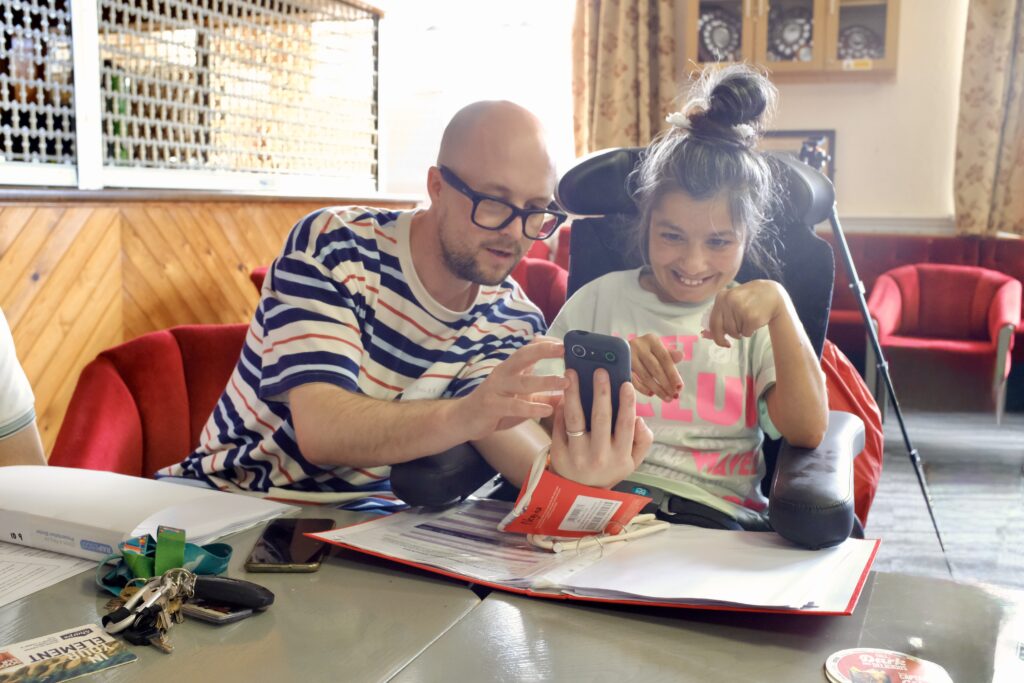
One of our participants, Negina, was gifted a new simplified smartphone through the project. She calls her tech training sessions “going to school,” and she’s incredibly proud of what she’s learned. She can now video call her family whenever she wants and search for her favourite music, small things that have made a big difference to her independence.
We’re also piloting simplified smartphones and smartwatches with built-in SIMs, fall detection and SOS buttons, so people feel more confident going out alone if they have a health condition that introduces fall risks.
But I think the most important thing is choice.
It’s about making sure people know what’s available to them and have real choice over being digitally included.
What have you got planned for our Annual Conference?
Our main mission is to make sure people with a learning disability are at the forefront of accessing and using digital technology, not treated as an afterthought, and there’s still a lot of work needed around access to the right technology.
We’re running a workshop with Cardiff University exploring how smart home technology can support wellbeing, independence and safety for adults with a learning disability.
It’ll be an interactive session where people can come along and try out technology like smart speakers, smartwatches and smart glasses, and there’ll be a chance for attendees to feed back on the technology they use and what they feel works best for them, helping us understand the impact technology can really have.
Book your tickets for the Learning Disability Wales Annual Conference by clicking on the buttons below.
Llandudno Junction, Wednesday 4 November 2026
Book your tickets for Llandudno Junction here
Swansea, Wednesday 11 November 2026
Book your tickets for Swansea here
The Insight app is developed by Innovate Trust to promote digital inclusion for adults with a learning disability, autism and additional needs. To find out more or get involved please visit https://innovate-trust.org.uk/services/insight-app/


 >
>
 >
>
 >
>